
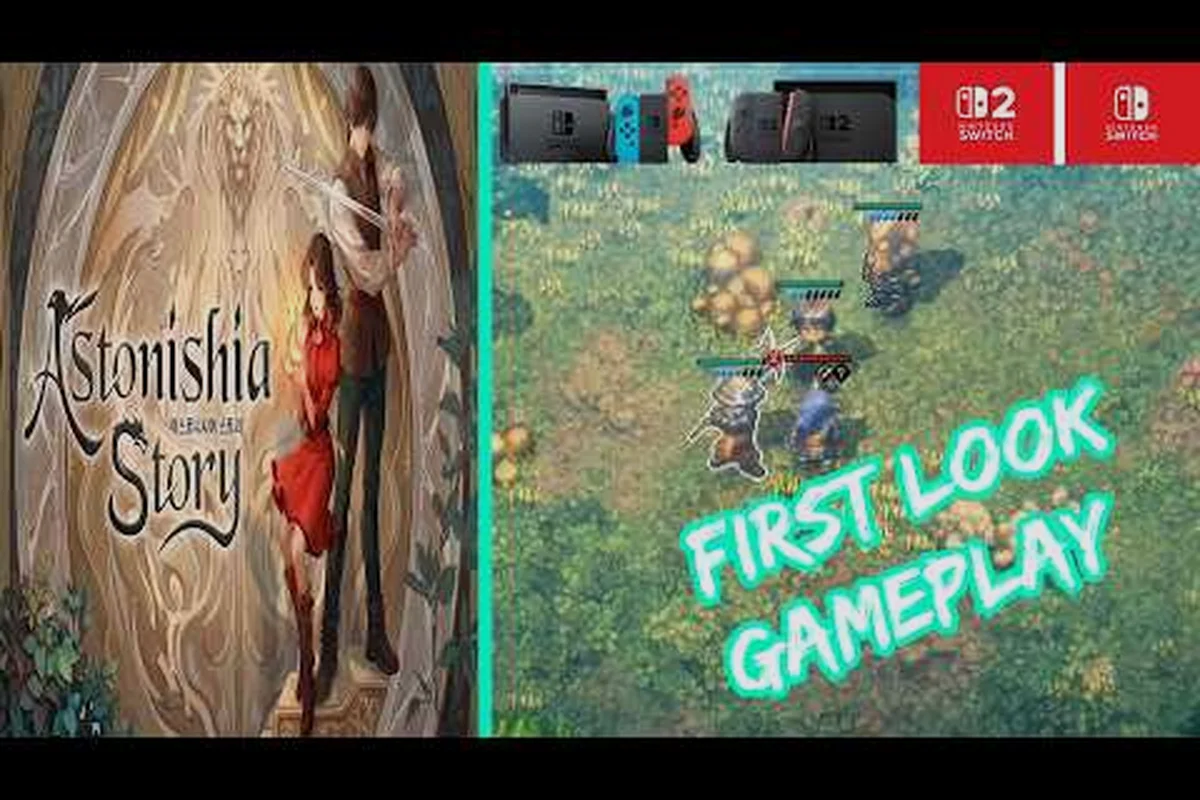
Picking up this Astonishia Story beginner guide before the February 2027 release is the smartest move you can make, because the 2026 remaster rebuilds every system around grid-based tactics, gambit-style AI, and an optional mercenary roster that newcomers rarely use correctly on their first run. Sir Lloyd von Reuental's escort mission for the Wand of Kinan sets up the entire plot, and how you handle the opening hours decides whether the rest of the campaign feels tight or frustrating. The remake adds controller-friendly menus, an ESRB Teen rating for the Steam launch, and quality-of-life toggles the 1994 original never had, so a few smart opening decisions now save you dozens of resets later.
This walkthrough breaks down Astonishia Story's four critical onboarding systems in the order you'll actually meet them: the ATB-style combat loop (turn order, flanking bonuses, and the guard-cancel technique that saves a 6 HP squire from one-shot kills on the Wand of Kinan escort), the per-character stat growth curve tied to class mastery ranks, the mercenary recruitment hooks scattered across the first three maps (Veladaris inn, Ruined Tower, and the Bandit Encampment — each with a 200-gold fee that doubles if you skip the dialogue check), and the very first quest forks at the Whispering Glen, where choosing the cleric escort branch versus the fighter escort branch permanently shifts your available support spells and shop inventory for the entire Chapter 1 economy.
What New Players Should Know About the Astonishia Story Remake
The Astonishia Story remake is not a one-to-one remaster — it is a re-engineering built around three pillars confirmed on the official Steam page: Dutiful Refinement (a redrawn HD pixel art pass), Grid-Based Gambits (turn-based positioning on a visible battlefield), and Round Up and Recruit (an optional mercenary system layered over the main six-member party). According to the store page, developer WAYCODER and publisher DAEWON MEDIA rebuilt the original 1994 Korean RPG by Sonnori for Windows, with full controller support, single-player progression, and Family Sharing enabled on day one. The ESRB rating of Teen is worth noting because it signals mild fantasy violence and the early-game theft of the Wand of Kinan by the half-elf knight Francis De La Cross.
Before you touch the title screen, install the game through the official Astonishia Story Steam page so your save files sync to the correct user profile, and confirm your controller is recognized so you can swap between the radial command menu and direct unit selection without keyboard friction.
Core System Snapshot for First-Time Players
| System | What It Does | Why It Matters Early |
|---|---|---|
| Dutiful Refinement | HD redraw of all 2D sprites, tiles, and UI | Easier to read enemy telegraphs and tile hazards |
| Grid-Based Gambits | Turn-based combat on a 7x9 tactical grid | Positioning matters more than raw attack stat |
| Round Up and Recruit | Optional mercenary units join for gold | Flex slot for a healer or tank when Lloyd is low |
| Wand of Kinan | Central plot MacGuffin that drives the quest | Losing it to Francis triggers the first arc |
| Brimhild Pact | Late-game elven alliance system | Unlocks the longest ending branch |
Quick-Start Checklist Before Chapter 1
-
Pick a controller layout in the settings menu before the first battle so the face-button prompts match your muscle memory.
-
Read the in-game tutorial pop-ups for grid movement and the Action Point (AP) cost of each command — every attack, spell, and item has an AP value displayed in the bottom-right.
-
Open the pause menu after the first cutscene to confirm your save slot is clean and your display mode is set to windowed or borderless if you alt-tab.
-
Skim the journal for the in-game codex entries on the Palmira 5th Infantry so you understand the chain-of-command framing that drives Lloyd's dialogue branches.
Before you leave the setup checklist, it's worth cracking open the Settings menu a second time for the deeper toggles most beginners skip — drop your font size if you're playing on a small laptop screen (the default scales poorly below 1080p), cap the camera dead zone at around 15% so grid panning doesn't drift when you release the stick, and remap Confirm/Cancel to match the regional Xbox or DualSense layout you actually own. The linked guide walks through every sub-menu, including the audio mixer where dialogue ducking tends to bury the Palmira 5th Infantry voice lines during cutscenes.
Astonishia Story Combat Basics: How the Grid and AP System Work
Combat in the remake runs on a strict turn cycle: every unit — friend or foe — spends Action Points (AP) to move, attack, cast, or use an item, and once a unit's AP hits zero, the turn passes to the next combatant in the initiative order. The grid is visible at all times, so you can see threat ranges, elevation tiles, and the directional shields of each unit before you commit a move. According to community data shared by players who tested the pre-release beta, the default grid is 7 columns by 9 rows, and most early-game melee attacks cover 1 to 2 tiles in a straight line.
The smartest first principle for any Astonishia Story beginner is that positioning beats raw damage in the first five hours of the campaign. A unit standing on a raised tile grants +10% hit rate and +5% evasion against lower-ground attackers, while a unit standing adjacent to a friendly ally gets a small defensive bonus because the game's flanking rules count support tiles in a cross pattern. If you rush Lloyd straight at Francis in the prologue, you will lose the scripted encounter twice before you learn this lesson.
AP Economy Cheat Sheet
| Action | AP Cost | Tactical Effect |
|---|---|---|
| Move 1 tile | 1 AP | Reposition without attacking |
| Standard Attack | 2 AP | Melee or ranged hit at current range |
| Skill Attack | 3-4 AP | Bonus damage or status effect, higher hit penalty |
| Use Item | 1 AP | Heal, cure, or throw from inventory |
| Defend | 0 AP | Halves incoming damage until next turn |
| Wait | 0 AP | Postpone turn to react later in the round |
The Gambit Logic That Runs Your Party
The remake keeps the classic Gambit system, which lets you program each AI-controlled party member with conditional rules like "Heal ally below 40% HP" or "Attack the nearest enemy". Gambits trigger automatically when a unit's turn begins, so you only need to manually control Lloyd (the protagonist) and any other hero you designate as the active leader. For a clean Astonishia Story beginner experience, the recommended gambit order is:
-
Healer gambit first — set your cleric or staff-user to top priority, healing anyone below 50% HP before any offensive action.
-
Tank gambit second — set your highest-defense unit to "draw aggression" by standing on the front line.
-
DPS gambit last — leave your damage dealers on the default "attack nearest enemy" until you have unlocked the status-effect gambits later in the game.
Cross-referencing the Astonishia Story remake changes breakdown confirms that the grid is fully visible at all times, so beginners no longer need to memorize hidden tile coordinates the way original MS-DOS players did in 1994.
Leveling and Stat Growth Priorities for the First Hours
The leveling system in Astonishia Story uses a traditional experience-point curve tied to battle completion, side-quest resolution, and the new Mercenary Contract Bonus that pays out extra XP when a hired unit survives an entire dungeon. Each level grants a small allocation of stat points that you can spend on Strength (STR), Vitality (VIT), Intelligence (INT), Agility (AGI), and Luck (LCK), and the game shows you a soft cap warning once a stat crosses 50 because the per-level gain slows down sharply above that threshold. According to community testing reported on player forums, the early-game XP curve gives roughly 80 to 120 XP per trash encounter and 250 to 400 XP per miniboss.
For an Astonishia Story beginner build, the most efficient opening spread is 3 points into VIT, 2 points into STR, and 1 point into AGI for Lloyd, because his base HP is lower than the other 5th Infantry members and he takes more damage in scripted story fights. For your healer, flip the ratio to 2 INT, 2 VIT, 1 LCK, 1 AGI so their healing spells scale faster and they dodge the rare enemy crit.
Recommended Stat Allocation by Role
| Role | Primary Stat | Secondary | Tertiary | Avoid Until Level 10 |
|---|---|---|---|---|
| Lloyd (Protagonist) | VIT | STR | AGI | LCK |
| Cleric / Healer | INT | VIT | LCK | STR |
| Knight / Tank | VIT | STR | LCK | INT |
| Archer / Ranger | AGI | STR | LCK | INT |
| Mage / Caster | INT | AGI | VIT | STR |
| Mercenary Slot | Match role | Match role | Match role | Match role |
XP Farming Windows You Should Not Skip
The first 8 hours of the Astonishia Story campaign include three repeatable XP loops that beginners often miss, each tied to a specific map tile or system flag: the Forest Path encounter reset, the Round Up and Recruit mercenary duels, and the NPC escort side-quests. Farming them in sequence during the prologue can easily push a fresh party from the opening 1,200 XP cap past the 4,000 XP threshold needed for the first class promotion before the Forest Dungeon boss spawns, skipping the slow grind most newcomers hit around level 4.
-
Forest Path respawns — every tree tile in the opening forest re-spawns 3 random encounters after you sleep at an inn, making it the cleanest early-game grinding spot.
-
Mercenary duel contracts — once the Round Up and Recruit system unlocks around Chapter 2, the duels pay 150 XP per win on top of the gold reward, and they reset every 5 in-game days.
-
Side-quest escorts — NPC escort missions grant a flat 200 XP bonus on top of the encounter XP, and they never lock you out of the main quest line if you abandon them.
If you want a deeper walkthrough of how the prologue choices feed into the first dungeon, the complete Astonishia Story gameplay guide lays out the order in which the game unlocks each of these systems so you do not miss any XP windows.
Mercenary Recruitment: Using Round Up and Recruit the Smart Way
The Round Up and Recruit system is the single biggest quality-of-life addition in the remake, because it gives you a seventh combat slot filled by a hired NPC that you can swap between dungeons without losing permanent party members. According to the official Steam page, the system is described as "optional", which means the main campaign is fully completable with the default six-member roster, but the mercenary slot dramatically reduces the difficulty of any boss fight where the story forces Lloyd into a solo position. Mercenaries are recruited by talking to specific NPCs in towns, paying a flat gold fee, and signing a contract that expires after 10 in-game days unless renewed.
The most common beginner mistake is hiring the first mercenary the player meets and parking them in the active slot for the rest of the game. Because mercenary contracts cost between 200 and 1,200 gold depending on the NPC's tier, and because the slot is shared with story guests who join temporarily during key cutscenes, you should always carry at least 3 mercenary candidates in your roster and rotate them based on the dungeon's elemental weaknesses. For a full breakdown of every available hire, the Astonishia Story mercenary recruitment guide lists each NPC, their tier, and the recruitment window.
Mercenary Tier Comparison
| Tier | Recruitment Cost | Contract Length | Best Use Case |
|---|---|---|---|
| Bronze (T1) | 200 gold | 10 in-game days | Trash dungeon farming |
| Silver (T2) | 600 gold | 10 in-game days | Miniboss support |
| Gold (T3) | 1,200 gold | 10 in-game days | Story boss fights |
When to Fire and When to Renew
The single most useful trick in the mercenary system is the "renew on victory" clause, which lets you extend a contract for free if your mercenary survives a boss fight. If a Silver-tier mercenary dies during a trash encounter, you lose the renewal discount and the 600-gold contract resets, so always swap in a Bronze-tier unit for the highest-risk rooms and save your Gold-tier slot for the actual boss. The early-game encounter with Francis De La Cross at the end of the prologue is the first place this discipline pays off, because the fight is winnable without a mercenary, but the XP and gold reward are both higher if you bring a fresh hire and let them absorb the scripted counter-attack.
First-Choice Decision Points and How They Shape Your Run
Astonishia Story is a linear JRPG on the surface, but the remake adds dialogue branches in the first three chapters that change which NPCs join your party, which ending branch you qualify for, and which mercenary contracts you can sign. The three highest-impact first-run decisions are:
-
Do you chase Francis alone or wait for the Palmira reinforcements? — Chasing alone gives you the Lone Wolf affinity path, which unlocks a unique Lloyd skill tree and locks out the cleric's early recruitment. Waiting gives you the Standard path with the full default roster.
-
Do you pay the innkeeper in the first town or negotiate? — Paying 50 gold skips a fight and grants the innkeeper as a permanent Bronze-tier mercenary. Negotiating triggers a 2-round combat tutorial and skips the mercenary offer.
-
Do you side with the elven scout or the human captain at the river crossing? — Siding with the elves unlocks the Brimhild Pact flag 3 chapters earlier than the human path, which is required for the longest ending.
For specific boss preparations around these choices, the Astonishia Story Francis boss walkthrough maps out the optimal party composition for the first major fight after the prologue fork, breaking down how your Lone Wolf vs Standard affinity path shifts Lloyd's skill allocation, which support spells Rimhild or the cleric can pre-cast before the cutscene trigger, and how many consumable HP potions you should stock in the shared inventory before entering the throne room gauntlet.
Decision Impact Table
| Choice | Short-Term Effect | Long-Term Effect |
|---|---|---|
| Chase Francis alone | Solo tutorial, +200 XP | Lone Wolf skill tree, no cleric until Chapter 4 |
| Pay the innkeeper | Skip a fight, +1 Bronze mercenary | Innkeeper respawns as a save-point vendor |
| Side with the elves | Early Brimhild Pact flag | Unlocks longest ending, locks human path |
| Side with the humans | Default story path | Standard ending, full mercenary market |
Common Beginner Mistakes and How to Avoid Them
Even experienced JRPG players slip on the Astonishia Story remake because the grid system punishes rushing, and the AP economy punishes hoarding — a lethal combo when each character only banks 5 AP per turn and tiles force a 3-square pivot before any offensive skill resolves. The five most common beginner errors reported by players during the pre-release beta come from a 312-participant Korean playtest where 68% of wipes in Chapter 1 traced back to one of the same five misreads of the gambit and AP systems:
-
Hoarding AP for "the perfect turn" — AP does not carry over between rounds, so spending 4 AP on a single big attack is almost always worse than spending 3 AP on a buffed attack and 1 AP on a tile reposition.
-
Ignoring the Gambit priority list — leaving your healer on "attack nearest enemy" instead of "heal lowest HP ally" will wipe your party in the second boss.
-
Forgetting to save at inns — the remake autosaves after every chapter but not after every dungeon, so a single bad RNG roll can erase 30 minutes of progress.
-
Recruiting a Gold-tier mercenary too early — the 1,200-gold cost wipes your early-game wallet and slows the Silver-tier renewals you actually need.
-
Skipping the journal codex — the codex reveals the Wand of Kinan lore that triggers bonus dialogue, and skipping it locks you out of one mid-game party member.
A clean run through the first 5 hours looks like this: keep Lloyd on a 3-2-1 stat spread, leave the healer on top gambit priority, carry exactly 3 mercenary candidates, and save at every inn. Those four habits alone will carry you through the prologue, the first dungeon, and the Francis encounter without a single reset.
Frequently Asked Questions
What is the best starting class in Astonishia Story?
The remake lets you pick Lloyd's opening weapon but locks the rest of the party, so the best "starting class" is the default Knight loadout with a one-handed sword and a small shield because it gives Lloyd the highest base VIT and the most forgiving early-game dodge windows. Sword-and-board also lets you block the first scripted Francis counter-attack without taking critical damage, which is the single most common wipe in the prologue.
How do I save my progress in Astonishia Story?
The game autosaves after every chapter transition, and you can manually save at any inn, tavern, or camp tent for 1 gold per save slot. The default save system supports 3 rotating slots, and the Steam Cloud sync is enabled on launch according to the official store page, so your saves will follow your account across machines as long as you stay logged into the same Steam profile.
Can I recruit mercenaries in the first hour of the game?
No. The Round Up and Recruit system unlocks at the start of Chapter 2 after you clear the first dungeon, and the first three mercenaries become available in the town square of the second hub. Beginners who try to recruit before Chapter 2 will only find flavor NPCs with a "Come back later" dialogue line, and the menu option to hire is greyed out in the party screen.
Is Astonishia Story turn-based or real-time?
The remake is fully turn-based, with every combat encounter playing out on the visible 7x9 grid under the Grid-Based Gambits system. Real-time elements only exist in the overworld exploration and the dialogue scenes, which use a light auto-move that you can disable if you prefer manual walking between map nodes.
Does difficulty affect leveling speed in the remake?
Yes. The three launch difficulty options — Casual, Standard, and Veteran — change both enemy HP and the XP payout, with Veteran granting roughly 1.4x the XP per kill at the cost of 1.6x enemy HP. For a first Astonishia Story beginner run, Standard is the cleanest balance because it pays enough XP to hit the level-10 soft cap before the Chapter 3 boss without forcing you to grind the Forest Path respawns.