
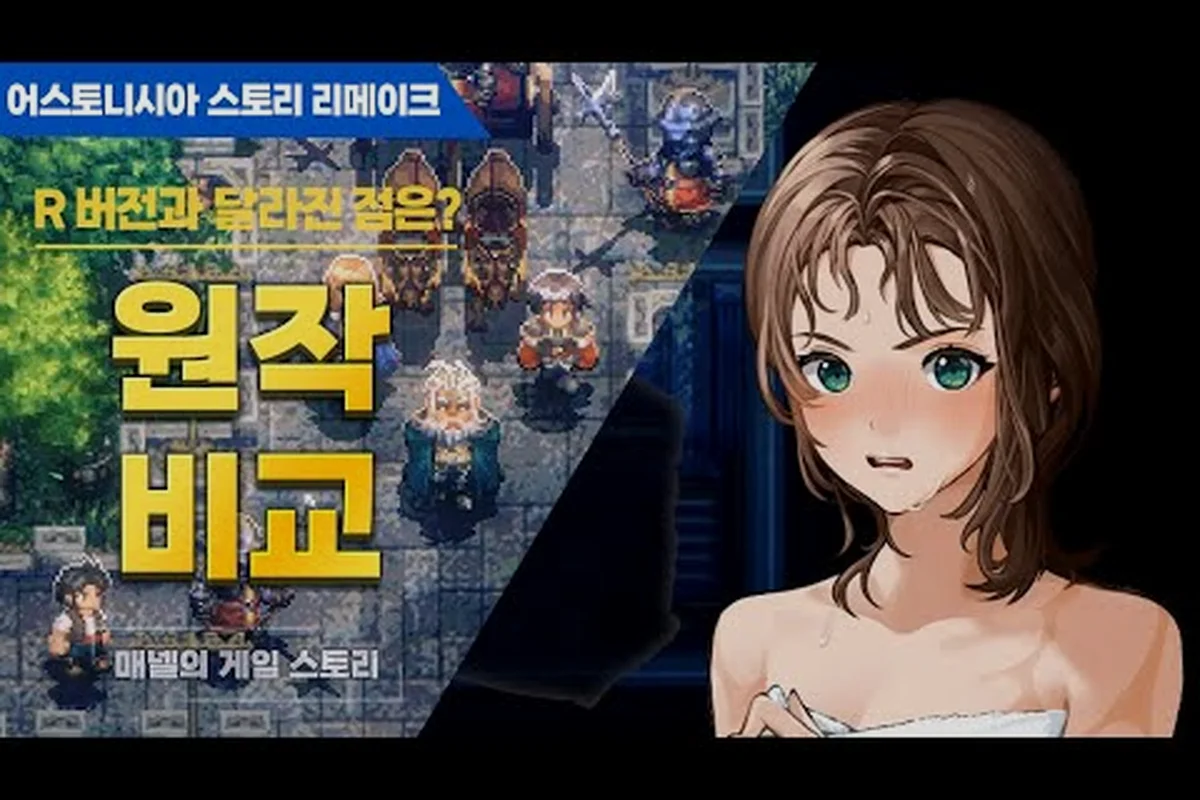
The 1994 Korean RPG classic is back, and the Astonishia Story remake changes reshape almost every system veterans remember. NIS America, alongside DAEWON MEDIA and WAYCODER, rebuilt the original Sonnori adventure with high-definition pixel art, a brand-new grid-based combat layer, and a mercenary recruitment system that fundamentally changes party building. According to the official Steam page, the planned release window lands on February 11, 2027 for Windows, with full controller support and an ESRB T rating. If you are returning to Palmira or stepping into Sir Lloyd's boots for the first time, this guide breaks down every confirmed overhaul, quality-of-life upgrade, and tactical shift you need to know before launch.
Dutiful Refinement: The Visual and Audio Overhaul
The single largest pillar of the Astonishia Story remake changes is what NIS America calls Dutiful Refinement, a top-to-bottom presentation rebuild of the 1994 MS-DOS original. Every sprite, tile, and battle portrait has been redrawn in high-definition pixel art, while the soundtrack has been re-orchestrated rather than simply remastered. Community reactions during early previews have focused heavily on how much cleaner dungeon lighting now reads, because the original often forced players to guess which tiles were walkable.
What Changed Visually
| Element | Original (1994) | Remake (2027) |
|---|---|---|
| Sprite resolution | Low-res DOS pixel art | HD redrawn pixel art |
| Battle portraits | Static small frames | Animated HD portraits |
| UI fonts | Bitmap Korean/English hybrid | Modern localized text |
| Lighting cues | Minimal, often ambiguous | Clear tile highlighting |
| Audio | PSG chiptune OST | Re-orchestrated soundtrack |
The remake also introduces modern widescreen support, which alone fixes one of the most common complaints in astonishia story beginner tips reddit threads about the original. Players no longer have to deal with stretched 4:3 letterboxing when running the game on modern monitors, and the widescreen framing exposes more of each dungeon room at a glance.
Why Presentation Matters for Tactics
Because combat now takes place on a visible grid, the clearer art direction directly serves the new Grid-Based Gambits system. A torch-lit corridor that was hard to read in 1994 now shows enemy sightlines cleanly, letting you plan ambush positioning before a single turn resolves. That same clarity is what makes the astonishia story walkthrough for beginners feel approachable even if you have never touched a tactical RPG before.
Grid-Based Gambits: The Combat Overhaul
Combat is where the Astonishia Story remake changes hit hardest. The original used a side-view turn-based system with limited positioning, but the remake converts every encounter into a tactical grid where facing, range, and terrain all matter. The official announcement trailer highlights this as Grid-Based Gambits, and it fundamentally restructures how Lloyd, Francis, and the recruitable allies interact in battle.
Core Combat Differences
| Mechanic | Original | Remake |
|---|---|---|
| Battle view | Side-view row | Top-down tactical grid |
| Positioning | Cosmetic | Affects hit/evade |
| Facing | Not tracked | Rear attacks deal bonus damage |
| Terrain | Flat | Height, cover, hazards |
| Turn order | Fixed initiative | AP-based gambit queue |
The shift to AP-based turns is the single biggest astonishia story gameplay guide talking point. Instead of a rigid party order, each unit accumulates action points based on speed, weapon weight, and class, which means faster characters like elven rangers can act multiple times before a lumbering knight swings once. Beginners should treat this as an incentive to keep at least one high-AGI ally in the active four-slot party at all times, because action economy wins fights more reliably than raw attack power in the remake.
Gambit Commands and AI Behavior
Each character now has a small palette of programmable gambit commands, similar in spirit to conditional triggers found in other tactical RPGs. You can set Lloyd to prioritize healing allies below 50% HP, or have Francis hold position and only counterattack when struck from a specific direction. This conditional layer is what experienced players in astonishia story beginner tips reddit discussions have singled out as the most replay-friendly addition, because it lets you author your own battle scripts without micro-managing every turn. For newcomers, the default gambit set works well through the first two chapters, but Chapter 3 onward begins to punish passive play, so learning the gambit menu early is worth the time investment.
Round Up and Recruit: The Mercenary System
Beyond graphics and combat, the Astonishia Story remake changes introduce an entirely new party-building layer called Round Up and Recruit. The original locked your party to a fixed roster of story characters, but the remake adds optional mercenaries scattered across the overworld who can be convinced, paid, or defeated into joining Lloyd's cause. This single addition explains why so many astonishia story walkthrough for beginners previews describe the remake as feeling like a different game despite the same plot.
How Recruitment Works in Practice
| Step | Action | Outcome |
|---|---|---|
| 1 | Locate a mercenary on the world map | Marker appears in HUD |
| 2 | Speak to them or win the encounter | Negotiation prompt opens |
| 3 | Pay gold, offer an item, or pass a check | Mercenary joins reserve |
| 4 | Swap them into the active 4-slot party | They become playable in battle |
Mercenaries fall into broad archetypes: frontline tanks, backline mages, and hybrid support units. The mercenary pool is finite per playthrough, so the order in which you clear optional content directly shapes your mid-game roster. If you want a complete rundown of the best starter party composition, the broader Astonishia Story beginner guide covers class matchups in detail and pairs well with this section.
Balancing Story and Side Content
Because story progression does not block mercenary encounters, you can detour between main chapters to recruit. However, the game's encounter scaling assumes you are roughly chapter-appropriate, so wandering too far ahead of the main quest will result in fights that are technically winnable but economically inefficient. Community data suggests keeping your average party level within two of the recommended chapter level when pursuing optional recruitment nodes. For players who want a step-by-step path through every chapter's story fights, the Astonishia Story full walkthrough lays out the recommended level for each major story beat.
Quality-of-Life Upgrades and Modern Features
Beneath the headline systems, the remake layers in a substantial set of quality-of-life improvements that smooth out decades-old friction points. The astonishia story remake changes guide discussion in the wider community has been especially focused on these because they affect every single play session, not just combat. The remake's updated features and modernized mechanics are detailed on the official Astonishia Story Steam store page, which outlines the remastered visuals, rebalanced combat, and quality-of-life changes introduced for new players.
Confirmed QoL Additions
| Feature | Original Pain Point | Remake Solution |
|---|---|---|
| Save system | Limited save points | Anywhere save + quicksave |
| Map navigation | Manual pen-and-paper tracking | Built-in map with markers |
| Inventory | Single-page Tetris-style grid | Sortable, tabbed inventory |
| Difficulty | Single fixed curve | Selectable from the start |
| Controller | Keyboard only | Full controller + remapping |
| Audio | Mono chiptune | Stereo re-orchestrated OST |
The anywhere-save feature alone is transformative for a game that originally forced players back to specific save shrines, sometimes losing 30 minutes of dungeon progress to a random encounter. Pair this with the quicksave layer, and the remake becomes dramatically less punishing for newcomers. If you are tuning the game to your hardware or want the exact control layouts for keyboard and gamepad, the dedicated Astonishia Story Steam guide covers input mapping and Steam-specific settings in depth.
Difficulty Modes and Accessibility
The selectable difficulty option is the second most impactful quality-of-life addition. Casual mode reduces enemy damage and increases post-battle healing, while Veteran mode preserves the original's brutal encounter design for players who want the authentic 1994 experience. There is also an Explorer mode aimed specifically at players who want to focus on the story and the new gambit system without being interrupted by frequent combat. None of these modes lock you out of the Round Up and Recruit system, so you can recruit the same mercenaries regardless of difficulty.
Story, Setting, and Returning Characters
The narrative backbone of the remake remains the same as the 1994 original, which is important context for anyone using an astonishia story walkthrough for beginners. Sir Lloyd von Reuental, vice-commander of the Palmira 5th Infantry, is transporting the holy Wand of Kinan when the half-elf knight Francis De La Cross steals it. That single theft kicks off a continent-spanning chase that intersects with the dying Life Tree, the eternally youthful elven queen Brimhild, and a conspiracy reaching back a century before the main story begins.
Returning vs. New Characters
| Character | Role | Status in Remake |
|---|---|---|
| Sir Lloyd von Reuental | Protagonist, Palmira knight | Returning, expanded gambits |
| Francis De La Cross | Half-elf antagonist/rival | Returning, deeper motivation |
| Brimhild | Elven queen | Returning, new scenes |
| Wand of Kinan | MacGuffin holy relic | Returning, plot-relevant |
| Mercenary archetypes | Optional allies | New addition |
The remake's expanded scenes give Francis more screen time, which the original lacked because of hardware constraints. Players picking up the remake will get a clearer picture of why the half-elf betrayal happened, and that context is woven into a few late-game combat encounters where Francis appears as a recurring rival rather than a one-off boss.
Plot Beats That Drive the Remake's Pacing
Because the Grid-Based Gambits system requires more deliberate positioning than the original's side-view combat, several mid-game chapters have been subtly re-paced to give the new mechanics room to breathe. Chokepoint dungeons like the Raven Forest and the Kinan Catacombs now feature multi-stage battles that reward gambit setup, whereas the 1994 version often resolved the same encounters in a single turn cycle. The story outcome is unchanged, but the journey to that ending is meaningfully different. For a complete chapter-by-chapter breakdown, the Astonishia Story full walkthrough is the natural companion read.
Frequently Asked Questions
Is the Astonishia Story remake a remaster or a full remake?
It is a full remake built from the ground up, not a remaster. The original 1994 Sonnori code was replaced, and the new version was developed by DAEWON MEDIA and WAYCODER with publishing from NIS America. Every system, from visuals to combat to party building, was rebuilt.
What is the biggest gameplay change in the Astonishia Story remake?
The shift to Grid-Based Gambits tactical combat is the most significant change. Positioning, facing, and AP-based turns replace the original's side-view fixed-order system, and that single change ripples through every encounter in the game.
Can I still play the game if I never played the 1994 original?
Yes, the remake was designed for newcomers. Story context is reintroduced through new scenes, and difficulty modes plus gambit automation make the tactical layer approachable. Most astonishia story beginner tips reddit advice centers on enabling Casual mode and using default gambits for the first two chapters.
How does the Round Up and Recruit mercenary system work?
You find mercenaries on the world map, then recruit them through dialogue, gold payment, item offers, or by winning a test battle. Once recruited, they sit in your reserve roster and can be swapped into the active four-slot party at any save point or camp.
When does the Astonishia Story remake release, and on which platforms?
According to the official Steam page, the planned release date is February 11, 2027, and the confirmed platform is Windows for PC. Full controller support and Family Sharing are listed, with an ESRB T (Teen) rating.