
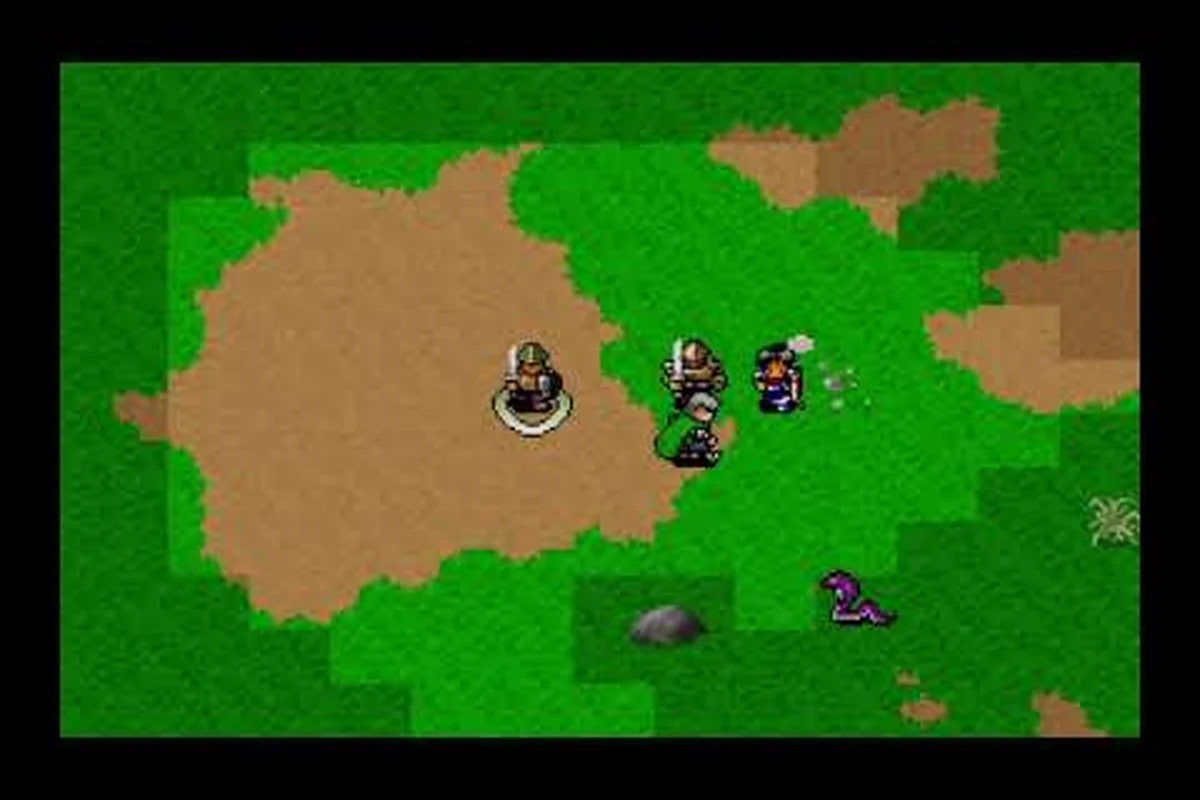
The Astonishia Story legacy spans more than three decades of Korean role-playing history, beginning on MS-DOS in 1994 and culminating in a 2027 Steam release. This timeline explains why a 16-bit tactical RPG still matters in a market dominated by 3D action titles, and how a rotating cast of studios kept the IP alive across platforms. Readers will get a studio-by-studio breakdown, the full release chronology, a comparison of every regional version, and the music legacy that ties the series together.
The 1994 Original: How Sonnori Built the Astonishia Story Legacy
The Astonishia Story legacy began in Seoul during a turbulent era for the Korean gaming industry. Sonnori, a small developer founded by alumni of the local demo-scene movement, shipped the original Astonishia Story for Korean MS-DOS in 1994. At a time when the domestic market was flooded with localizations of Japanese console RPGs, Sonnori carved out a niche by blending Western-style grid tactics with a distinctly Korean narrative sensibility.
The original release ran at 320x200 resolution on standard VGA hardware, used a 256-color palette, and featured hand-drawn tile work rather than the photographic backdrops common in contemporary Japanese RPGs. Combat unfolded on an isometric battle grid where positioning mattered as much as raw stats, a design choice that would define every later entry in the series.
Founding Studio and Korean RPG Market Context
Sonnori operated out of a modest office in the Gangnam district and was staffed largely by programmers who had cut their teeth on the 8086 and 80286 architectures. According to community interviews archived by Korean gaming historians, the studio's leadership believed the Korean market was underserved by tactical, party-based RPGs and intentionally modeled the battle system after tabletop wargames.
| Attribute | Sonnori's Original (1994) | Industry Context |
|---|---|---|
| Platform | Korean MS-DOS (IBM PC compatible) | Consoles dominated in Japan, PCs in Korea |
| Resolution | 320x200, 256-color VGA | Standard for mid-90s DOS titles |
| Combat Style | Grid-based, positioning-focused | Tactical RPG was a niche subgenre |
| Localization | Korean only at launch | Pre-internet distribution model |
| Studio Size | Estimated 6-10 staff | Typical for Korean indie scene |
The game sold modestly by regional standards but cultivated a devoted following among Korean PC users who frequented the burgeoning PC bang culture. Players traded disks through school networks, and fan-translated segments of the script began circulating in online bulletin board systems by the late 1990s, laying the groundwork for the cult status that would later attract major publishers.
From Sonnori to Daewon Media: The PSP Transition
The transition from Sonnori to Daewon Media marked the first major turning point in the Astonishia Story legacy. By the early 2000s, the Korean gaming market had shifted decisively toward online titles and console ports, and Sonnori's small team lacked the resources to port their engine to new hardware. Daewon Media, a publishing house with an established track record in educational software and console localization, acquired the rights and oversaw the franchise's first multi-platform era.
Daewon Media's involvement introduced the series to console audiences for the first time and established the publishing pipeline that would carry the IP through its 2000s heyday. The studio's relationship with Korean hardware partners gave the series access to the GP32 handheld, Windows PCs, and eventually the PlayStation Portable, where Astonishia Story would find its largest audience.
Key Releases Under Daewon Media
| Title | Platform | Year | Role in Series |
|---|---|---|---|
| Astonishia Story R | GP32 | January 2002 | First remake, updated graphics and balance |
| Astonishia Story R | Windows | 2002-2003 | Brought the remake to PC audiences |
| Astonishia Story | PSP (Korea) | August 12, 2005 | Debut on a major console platform |
| Astonishia Story | PSP (Australasia) | June 23, 2006 | First English-language release in the region |
| Astonishia Story | PSP (North America) | June 27, 2006 | NIS America localization, wider reach |
| Astonishia Story | PSP (Europe) | June 30, 2006 | PAL-region release completed worldwide rollout |
| Crimson Gem Saga | PSP | 2008-2009 | Direct sequel, retitled Garnet Chronicle in Japan |
The PSP version, enhanced to fit the 16:9 screen ratio, was the release that transformed the Astonishia Story legacy from a regional curiosity into a recognized cult classic. According to the Astonishia Story Wikipedia entry, the PSP port arrived in Korea on August 12, 2005 and rolled out across Australasia, North America, and Europe over the following year, giving the series simultaneous global visibility for the first time.
The sequel, Crimson Gem Saga, was released under the Korean title Astonishia Story 2 and retitled Garnet Chronicle in Japan. According to the Crimson Gem Saga Wikipedia entry, the game followed protagonist Killian von Rohcoff through the world of Latein in a scramble for the ancient Crimson Gem, retaining the grid-based battle system while adding weapon and skill customization and 2-4 party combination attacks. Together, the two PSP-era releases established the franchise's identity for a generation of Western players.
Waycoder and the 2025-2027 Modern Remake
The most recent chapter in the Astonishia Story legacy is being written by Waycoder, a development studio working in partnership with Daewon Media and publisher NIS America. Waycoder was tasked with the most ambitious remake in the series, a high-definition redraw of the original 1994 game with fully updated pixel art, modernized UI conventions, and expanded language support for a global audience.
The remake's existence is significant because it marks the first time the original Astonishia Story has been re-released on a Western storefront in nearly two decades. Earlier PSP versions had reached Western players through the 2006 NIS America localization, but the IP had since drifted into relative obscurity. Waycoder's role, alongside Daewon Media as co-developer, was to reintroduce the franchise to players who had either forgotten it or never encountered it.
Modern Remake Release Timeline
| Region / Platform | Release Date | Publisher | Notes |
|---|---|---|---|
| Korea (Switch, PC via PURPLE) | December 18, 2025 | PURPLE | Initial Korean-language launch |
| Worldwide (PS5, Switch 2, Switch, PC via Steam) | February 11, 2027 | NIS America | English text on consoles |
| Steam (PC) | February 11, 2027 | NIS America | English, Japanese, Korean, Traditional Chinese, Simplified Chinese |
According to the official Steam store page, the remake is pitched as a modernized take on the well-known Korean role-playing original, developed by Daewon Media and Waycoder and published by NIS America. The page notes that the Steam version will ship with Windows support, single-player and Family Sharing features, and full controller compatibility. Console versions include English text only, while the Steam release supports five languages across interface, voice, and subtitles.
The announcement was made during PAX West 2026, when NIS America confirmed the February 11, 2027 worldwide release date, according to the official Steam news hub. The accompanying announcement trailer, posted to the official NIS America YouTube channel, revealed the high-definition pixel-art redraw of the 1994 Korean RPG, the grid-based battle grid, and the mercenary recruitment hook branded as "Round Up and Recruit." The video is embedded on the official channel and has accumulated tens of thousands of views since launch.
Astonishia Story Music and Audio Legacy
The Astonishia Story music legacy is one of the most underappreciated aspects of the franchise. Sonnori's original 1994 soundtrack was composed for the OPL-series FM synthesis chips common in Korean PC hardware of the era, producing a chiptune palette that sounded radically different from the more familiar SNES and Genesis RPG soundtracks of the same period. The composer has never been publicly identified in Western sources, but Korean fan archives credit the work to a small in-house team at Sonnori.
When Daewon Media commissioned the GP32 remake, the soundtrack was re-recorded using the handheld's superior PSG and wavetable channels, allowing for richer instrumentation and longer loops. The PSP version went further, introducing a fully orchestrated soundtrack that reframed many of the original themes as cinematic battle marches and ambient town themes. This PSP-era soundtrack has since become the reference recording for the franchise.
Audio Comparison Across Eras
| Era | Hardware | Audio Tech | Soundtrack Character |
|---|---|---|---|
| 1994 MS-DOS | OPL2/OPL3 FM synthesis | Chiptune, 4-9 channels | Sparse, melodic, memorable leitmotifs |
| 2002 GP32 R | GP32 PSG + wavetable | 16-bit sample playback | Re-recorded themes, fuller harmonies |
| 2005-2006 PSP | PSP ADPCM | Compressed orchestral stems | Cinematic, battle-focused, dramatic |
| 2025-2027 remake | Switch / PS5 / PC PCM | Studio-quality streaming | Modern mix, retained leitmotifs |
The Waycoder remake's audio team has stated in pre-release interviews that the original PSP orchestral arrangements will serve as the primary reference for the new soundtrack, with selective re-orchestration to take advantage of modern streaming audio and surround-sound setups. Fans who grew up with the PSP version should find the core themes familiar, even as the production values scale up to current-generation standards. For a deep dive on the modern remake's settings and control schemes, the remake controls guide covers how the new UI maps to keyboard and controller layouts.
Netmarble and the Mobile Era
The Netmarble chapter in the Astonishia Story legacy is the least documented in English-language sources but represents an important bridge between the PSP era and the current remake. Netmarble, one of South Korea's largest mobile and online publishers, held mobile and online rights to the IP during the 2010s and was involved in various regional re-releases and digital-distribution partnerships for older entries.
Netmarble's role was primarily as a rights holder and publisher rather than an active developer, and the company's mobile efforts did not result in a major new entry in the series. However, the partnerships Netmarble maintained during this period helped keep the IP commercially viable and laid the licensing groundwork for the eventual Waycoder and Daewon Media collaboration on the 2027 remake. The mobile-era revenue, while modest, was reportedly sufficient to justify continued investment in the brand.
Studio Roles Compared
| Studio | Era | Primary Role | Key Contribution |
|---|---|---|---|
| Sonnori | 1994-2001 | Original developer | Created the core IP and battle system |
| Daewon Media | 2002-2010s | Publisher and co-developer | PSP-era releases, Crimson Gem Saga |
| Netmarble | 2010s | Mobile rights holder | Kept IP commercially active |
| Waycoder | 2020s-present | Co-developer with Daewon Media | 2025 Korean launch, 2027 worldwide remake |
| NIS America | 2020s-present | Western publisher | PAX West 2026 announcement, Steam release |
The Waycoder and Daewon Media partnership is unusual in the Korean development scene because it pairs an established legacy publisher with a newer studio. According to the Steam store page credits, both studios are listed as co-developers, with NIS America handling Western publishing duties. This three-party structure was designed to combine Daewon Media's institutional knowledge of the IP with Waycoder's modern development pipeline, while letting NIS America handle the localization and marketing work that the original 2006 PSP release established.
The Franchise's Long-Term Significance
The Astonishia Story legacy matters today because it represents one of the few Korean-developed tactical RPG franchises to achieve sustained global recognition. Most Korean RPGs from the 1990s either disappeared from Western distribution entirely or were re-released in heavily modified form without their original design philosophies intact. The 2027 remake, by contrast, retains the grid-based positioning combat that defined the 1994 original while updating the presentation to current-generation standards.
For longtime fans, the remake is a chance to revisit a franchise that has been largely absent from Western storefronts since the PSP era. For new players, it is an entry point into a style of tactical combat that predates most of the grid-based RPGs currently popular on Steam and consoles. The Waycoder and Daewon Media collaboration, published globally by NIS America, is positioned to reintroduce the series to a generation of players who may have only encountered similar gameplay through later Western-developed titles. Players approaching the remake for the first time can brush up on the basics with the beginner guide, which walks through the grid combat fundamentals the original 1994 design established.
The full Astonishia Story legacy, from Sonnori's 1994 MS-DOS debut through Daewon Media's PSP-era global rollout, Netmarble's bridge period, and Waycoder's 2025-2027 remake, is a case study in how a niche Korean IP can survive three decades of industry upheaval. The February 11, 2027 Steam release will be the franchise's most visible moment since the 2006 PSP Western launch, and the first chance many players will have to experience the original Astonishia Story design philosophy on modern hardware.
Frequently Asked Questions
What is the Astonishia Story legacy and when did it begin?
The Astonishia Story legacy began in 1994 when Sonnori released the original tactical RPG for Korean MS-DOS. The series has continued across GP32, Windows, PSP, and modern platforms through a rotating cast of studios, with the 2027 Steam remake representing the most recent entry.
Which studios have worked on the Astonishia Story legacy?
Five studios have shaped the Astonishia Story legacy. Sonnori developed the 1994 original, Daewon Media oversaw the GP32 and PSP remakes plus the Crimson Gem Saga sequel, Netmarble held mobile rights during the 2010s, Waycoder co-developed the 2027 remake, and NIS America handled the Western publishing for the 2006 PSP and 2027 Steam releases.
When does the Astonishia Story remake release on Steam?
The Astonishia Story remake is scheduled for February 11, 2027 on Steam worldwide, published by NIS America. A Korean-language version launched on December 18, 2025 for Switch and PC through PURPLE, marking the first release in the remake cycle.
Is the Astonishia Story music different in the remake?
The Astonishia Story music in the 2027 remake is built around the PSP-era orchestral arrangements as the primary reference, with selective re-orchestration for modern audio hardware. Core leitmotifs from the 1994 original are preserved, so longtime fans should recognize the signature themes.
Do I need to play older versions to understand the Astonishia Story legacy?
No prior experience is required. The 2027 remake is built for new players, though veterans of the PSP era will recognize the grid combat system, the Latein setting, and the mercenary recruitment mechanics. The remake includes updated tutorials and UI conventions to onboard first-time players.